

Al “Pub Landlord” Murray ends his account of Tuesday September 19, the third day of the 1944 battle of Arnhem, when Polish paratrooper Stanisław Kulik was still in England waiting to be flown to Holland into what was already a doomed Allied venture.
Murray’s Arnhem Black Tuesday appeared in time for the 80th anniversary of the Market Garden operation Field Marshal Bernard Montgomery thought would end the Second World War by Christmas. The story of Kulik and his Polish 1st Independent Parachute Brigade comrades tells us what happened after Murray wraps up his account on the evening of that Tuesday. By then Arnhem was burning and Montgomery’s plan was in chaotic and costly tatters.
The son of a parachute engineer, Murray admits to an obsessive interest in the battle. His book provides lots of detail of what happened on that third day after the initial Sunday landing. In telling us where units were deployed, the tactics employed, and the weapons used by the opposing forces he pays tribute to the gallantry of those fighting and dying on that critical day.
Kulik’s story, as told by his grandson biographer Nicholas Kinloch, begins with him as a farmer’s son in what is now Ukraine. In 1939 he and his family were taken by the invading Soviet forces to work in a Siberian gulag. When Hitler invaded the Soviet Union two years later Kulik was released to join the Polish army in exile.
Kinloch describes his long and dangerous journey to eventually find it in Tashkent. From there Kulik travelled via Iraq and India to arrive in Liverpool in 1943. Still a teenager, he trained in Fife and then at RAF Ringway Manchester to be a paratrooper under the charismatic leadership of Major General Stanisław Sosabowski.
Kulik was not the only Allied soldier stuck in England on “Black Tuesday”. Major Brian Urquhart, British Airborne’s chief intelligence officer, had been sent home to Sussex days before the attack. He had raised doubts about the wisdom and viability of Market Garden with its commander, Lieutenant General Frederick “Boy” Browning. Urquhart paid the price for challenging the groupthink of Browning and most of his fellow Airborne officers who saw Market Garden as a party, a pushover against weak and demoralised German forces.
Murray, in his concentration on the events of September 19, does not mention Urquhart.
But he does give his readers some useful material on his fellow sceptic, Sosabowski. Captured by the Germans while defending Warsaw in 1939 he had escaped first to France and then to Fife in Scotland where he had built the Polish 1st Independent Parachute Brigade, the Brygada.
Murray tells us that Sosabowski was “a seasoned professional soldier who fought in the First World War, selected the officers and men personally … and at Largo House [Fife] he had developed techniques and equipment for training parachutists independently of the British.”

Training was particularly demanding “as Sosabowski’s men had all made the arduous journey from the Soviet Union and many were suffering from malnutrition”. Kulik was one of them.
Murray writes that after the remains of the Allied Airborne force under Major General Roy Urquhart [no relation to Major Brian Urquhart] were penned into a shrinking perimeter in Oosterbeek, west of Arnhem and north of the Rhine, Sosasbowski and his men “landed south of the river at Driel on Wednesday – without their anti-tank guns – and did what they could to get men across the river by boat to join 1st Airborne.
“Major General Stanisław Sosabowski found himself given some of the blame for how the Battle had played out south of the river, as the British top brass closed ranks in the face of the Allied failure to relieve Urquhart and his men. Once again, the Poles were short-changed by “Boy” Browning, who after doing so much campaigning to get them under his control now dropped them like a hot brick.”
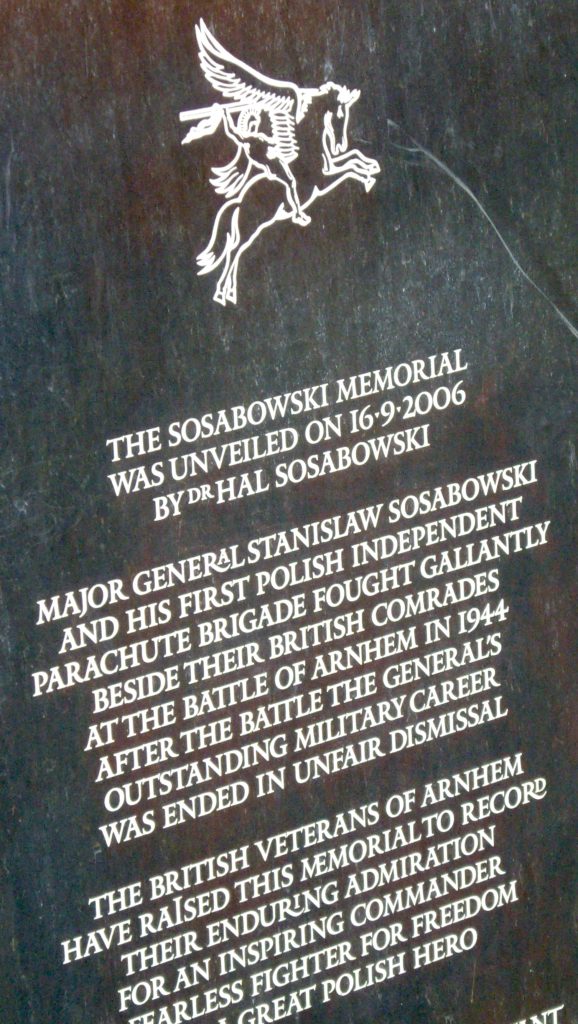
Kulik was part of that costly Polish relief effort. He was left stranded on the wrong side of the Rhine when many of his Allied comrades were evacuated by boat under cover of darkness a week after “Black Tuesday”.
Hungry and hunted Kulik spent weeks surviving in Nazi-occupied Holland with the help of the Dutch underground:
“It was hard, being on my own day after day. I was constantly on a hair trigger, and looking out for danger, not knowing what would happen to me from one day to the next, or from one hour to the next. Knowing that there were hundreds or thousands of German soldiers out there who were looking for me, who wanted to kill me, or shoot me, or at the very least wanted to take me away and throw me in some Nazi prison camp. Not knowing if anyone was coming to help.”
Far from the Allied victory by Christmas this was the reality for Kulik hiding in a Dutch forest:
“I wondered whether the army had forgotten about me. Maybe they were focusing on other goals, like getting to Berlin, and now they were just leaving us here to fend for ourselves… Maybe nobody was ever going to come to help us. Maybe all of the Dutch underground were going to be captured and then nobody could bring any food or water here, and then I’d gradually die from starvation.”
While training in Fife Kulik had met a local girl:
“I thought about Isa, back in Scotland. I wondered what she was doing, and if she had been told that I hadn’t made it back over the river with the others? What would she be thinking? Would she think that I had been killed?”
After five perilous weeks behind German lines, Kulik finally made it to the zone controlled by the Allies and rejoins his surviving Polish paratroopers at Stamford:
“The mood was sombre there. Many paratroopers had been killed and our brigade had lost a quarter of its fighting strength – almost 600 casualties. We had all lost close friends and colleagues.
“To add insult to injury, there was a rumour going round that despite risking our lives we were now being criticised by the British, and that attempts were being made to turn Sosabowski and the Polish Brigade into the scapegoats for failure of the operation to achieve all its goals.
“Operation Market Garden had captured the bridges at Eindhoven and Nijmegen, but the failure to capture the bridge over the Rhine at Arnhem meant that the war would not now be finished before the end of 1944.”
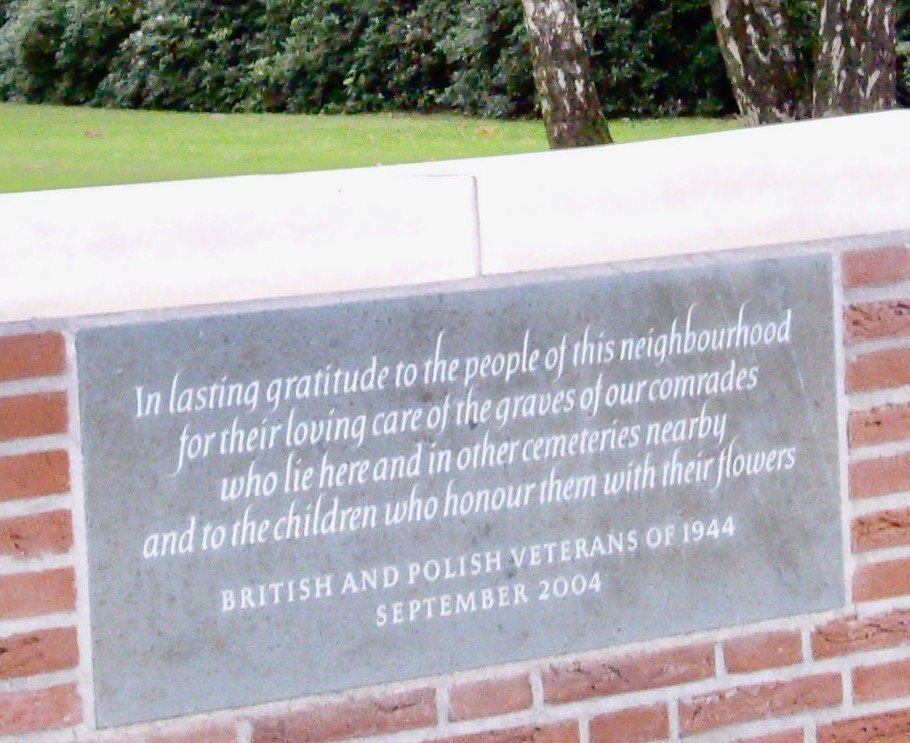
The consequences of that were profoundly serious, according to Brian Urquhart, whose scepticism about Market Garden had led to him being sent home before it was launched. He writes in his memoir A Life in Peace and War:
“The operation which was to end the war in Western Europe had been an unmitigated disaster, almost certainly destroying all possibility of an early victory. It had diverted essential support from Patton when he was forging ahead, given the Germans a success on the eve of their total defeat, made a nightmare of the last months of war for the Dutch, and had landed the British Army in a riverine swamp for the winter.
“The casualties, both military and civilian, were appalling – more than 17,000 Allied soldiers killed, wounded or missing in nine days of fighting, no possible reckoning of civilian casualties, and all for nothing or worse than nothing. Much of the town of Arnhem was destroyed, and after the battle the Germans forcibly evacuated the entire population for the remainder of the war. Small wonder that Prince Bernhard [of the Netherlands] later remarked: ‘My country can never again afford the luxury of another Montgomery success.’”
Kulik was greeted on his return to England by a week of CB – confined to barracks. “’Welcome back,’ the officer said to me without smiling, as I arrived back at the camp. ‘It’s been reported to me that you didn’t salute and officer before you left for Arnhem, so it has been decided that you will have seven days CB.’
His biographer records him saying: “It was just sitting in a room by yourself – like prison. You dirty buggers, I thought to myself, I fought for the country and that’s the thanks I get. What if I’d died?”
His commanding officer, Sosabowski, suffered greater ignominy. After Arnhem he was removed from command of the Polish brigade he had created, trained and led. After the war he worked in a West London assembly plant before his death in 1967.
Browning suffered no such fate. On retiring from the Army in 1948 he became treasurer in the office of the Duke of Edinburgh. His daughter married Montgomery’s son.
Kulik settled with his wife Isa in Scotland working initially on a farm and then for Fife Council. He returned to Holland in 2006 to attend the ceremony at which the Ist Polish Independent Parachute Brigade received the Military Order of William, the country’s oldest and highest honour.
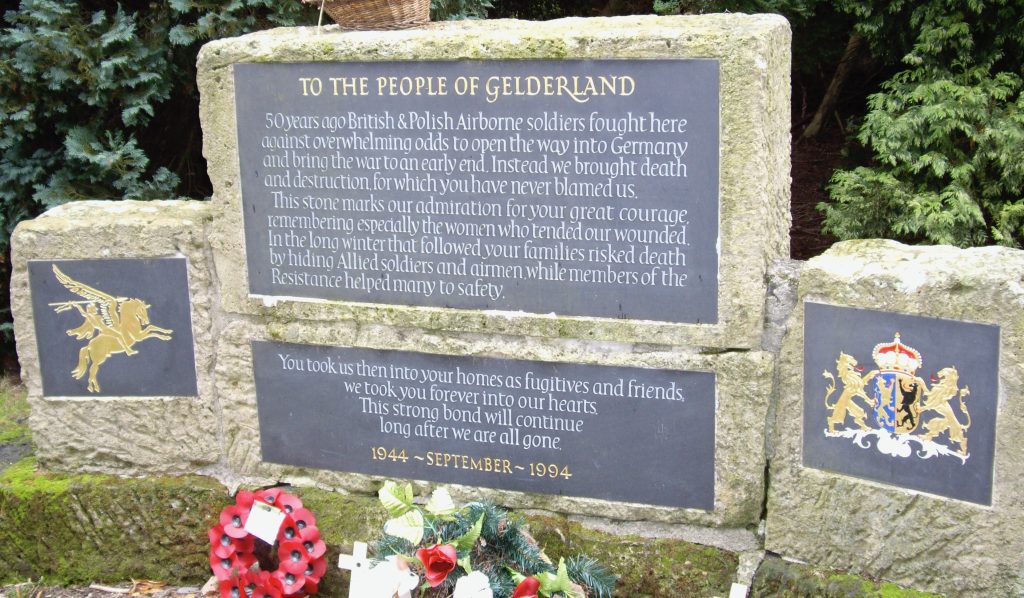
Murray’s book does what it says on the tin in detailing and illustrating the events of Tuesday September 1944. But the author is an Oxford history graduate surely well capable of setting what happened that day in a wider and deeper context.
There are plenty of materials to enrich our understanding, including those from Airborne’s disregarded chief intelligence officer, Brian Urquhart, who foresaw and warned against many of the disastrous events described in Murray’s book.
In My Life in Peace and War the man who went on to help set up the United Nations and headed its peace-keeping force tells us, for example, that he only discovered 40 years after Market Garden that the intelligence about the German forces which informed his scepticism about the operation was never shown to his Airborne comrade John Frost, the courageous hero of Arnhem Bridge. He and all the brave young soldiers who were ordered to Holland, including Stanisłav Kulik, were thus sent blind into Montgomery’s ill-judged operation.
Perhaps the Pub Landlord will delve deeper and pan wider in his next book. Until he does we have Nicholas Kinloch’s fine account of his remarkable grandfather to enlighten us.
If you would like to be notified by email of new posts please sign up to my mailing list